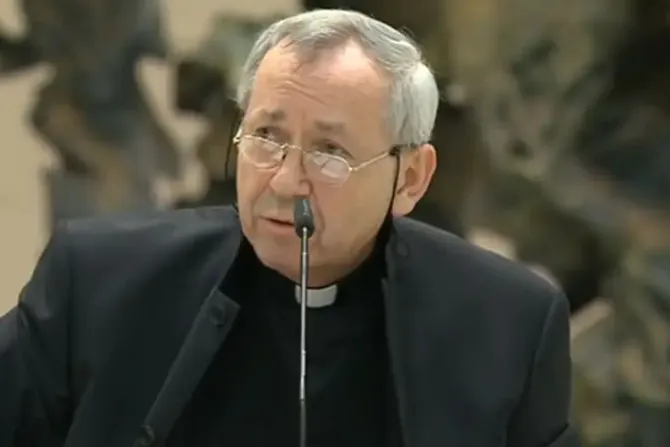
Father Marko Rupnik, the former Jesuit priest and mosaic artist accused of serious abuses against women, has been accepted for priestly ministry in a diocese in Slovenia, according to Italian and German media reports.
The news portal financed by the German Bishops’ Conference, Katholisch.de, reported Wednesday that the Diocese of Koper confirmed Rupnik had been incardinated in the diocese, meaning he is under the authority of the diocesan bishop.
CNA reached out to the diocese for confirmation and to clarify Rupnik’s exact role but did not receive a response prior to publication.
The Diocese of Koper covers the westernmost side of Slovenia and has over 266,000 inhabitants. Rupnik was born in the small Slovenian town of Zadlog, which is part of the Diocese of Koper.
The once-popular mosaic artist was dismissed from the Jesuits on June 9 for failing to obey the directions of his superiors, including restrictions on his ministry imposed at the recommendation of investigators.
In February, the Jesuits said they had opened a new internal procedure against Rupnik to investigate accusations against him spanning from 1985 to 2018. The “highly credible” accusations, they said, included claims of spiritual, psychological, and sexual abuse, and abuse of conscience.
Rupnik was also briefly excommunicated in 2019 for absolving in confession an accomplice in a sin against the Sixth Commandment.
Rupnik’s welcome into the Slovenian diocese stands in contrast to the sanctions imposed on the religious sister with whom he co-founded the Loyola Community of religious women in Slovenia where his abuses allegedly took place.
Sister Ivanka Hosta, the superior general of the Loyola Community since 1994, was quietly removed in June from the governance of the community and has been banned from contacting current or former sisters for three years and ordered to make monthly pilgrimages to pray for Rupnik’s victims.
She is reportedly staying in a monastery in Braga, in northern Portugal, following the conclusion of an investigation into her leadership of the religious community by the Diocese of Rome.
Hosta founded the community of women religious together with Rupnik in Ljubljana, Slovenia, in the early 1990s, though the two dramatically split ways in 1993.
According to a June 21 decree sent by Rome auxiliary bishop Daniele Libanori, SJ, to Hosta, and obtained by the news outlet Sete Margens, Hosta was prohibited from holding any position or function of government or from carrying out any spiritual direction in the community.
These article was originally published on Catholic News Agency.