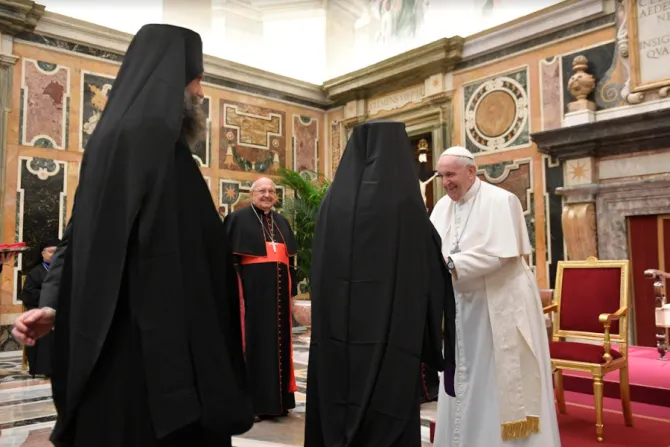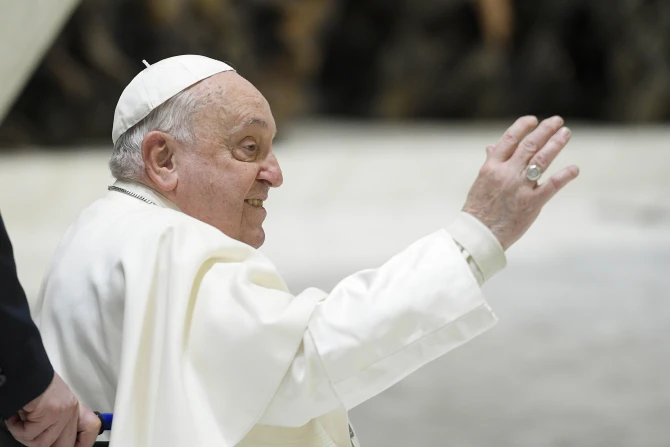
Pope Francis emphasized how suffering can become “an occasion for a transformative encounter” with God in a new message released Monday, describing three distinct ways the divine draws close to those experiencing illness and hardship.
In his message for the 2025 World Day of the Sick — signed Jan. 14 at the Archbasilica of St. John Lateran — the pontiff pointed to presence, gift, and sharing as profound paths of providential companionship during times of trial.
He also addressed all those “who are ill or who care for the suffering,” telling them: “Your journey together is a sign for everyone: ‘a hymn to human dignity, a song of hope.’”
The 88-year-old pope wrote from personal experience, having faced several health challenges in recent years, including knee problems requiring a wheelchair, respiratory infections, and, most recently, a fall resulting in a forearm contusion.
“In times of illness, we sense our human frailty on the physical, psychological, and spiritual levels,” the pope wrote. “Yet we also experience the closeness and compassion of God, who, in Jesus, shared in our human suffering.”
Francis emphasized that God’s first way of being close is through presence, noting that suffering “becomes an occasion for a transformative encounter, the discovery of a solid rock to which we can hold fast amid the tempests of life.”
Addressing the second aspect — gift — Francis cited Venerable Madeleine Delbrêl, emphasizing that hope comes primarily from the Lord as “a gift to be received and cultivated.” The pontiff has previously pointed to the prayerful witness of the French writer, poet, essayist, social worker, and mystic.
In the message released Monday, the pope explained that the third dimension of divine closeness manifests through sharing, particularly in health care settings where mutual enrichment often occurs between patients, medical staff, and family members.
The pope concluded his message with a special word of gratitude to health care workers and those who care for the sick, calling their shared journey “a hymn to human dignity, a song of hope.”
He entrusted all who are ill to the intercession of Mary, Health of the Sick, and asked for prayers for himself.
The World Day of the Sick is traditionally celebrated on Feb. 11, the feast of Our Lady of Lourdes.
This article was originally published on Catholic News Agency.