Skip to content

Pope Francis on Divine Mercy Sunday: The ‘fullness of life’ is ‘realized in Jesus’

Pope Francis during the Regina Caeli on Divine Mercy Sunday noted that the “fullness of life” comes not from the pursuit of transitory pleasure but is “realized in Jesus.”

Pope Francis during the Regina Caeli on Divine Mercy Sunday noted that the “fullness of life” comes not from the pursuit of transitory pleasure but is “realized in Jesus.” 

“To have life,” the pope said, “it is enough to fix one’s eyes on the crucified and risen Jesus, encountering him in the sacraments and in prayer, recognizing that he is present, believing in him, letting oneself be touched by his grace and guided by his example, experiencing the joy of loving like him. Every living encounter with Jesus enables us to have more life.” 

Divine Mercy Sunday, instituted by St. John Paul II during the Jubilee Year of 2000, is celebrated on the Second Sunday of Easter.

The pope drew upon the disciples, despondent and secluded in the upper room, who “are going through the most tragic moment in life” to showcase how Christ’s coming to them was a deeply transformative moment, one that not only reveals his mercy but also promises a new life. 

“The Risen One comes to them and shows them his wounds,” the pope said. “They were the signs of suffering and pain, they could stir feelings of guilt, yet with Jesus they become channels of mercy and forgiveness.” 

“The disciples see and touch with their hands the fact that with Jesus, life wins; death and sin are defeated. And they receive the gift of his Spirit, which gives them a new life, as beloved sons, imbued with joy, love, and hope.”

Pope Francis presented this message in contrast with today’s prevalent narratives of what constitutes a good life and the pursuit of happiness, observing that it is “a frenetic race to enjoy and possess many things.” 

Cautioning against this materialistic and myopic view, he stressed that “by following the path of pleasure and power one does not find happiness.”

“Indeed, many aspects of existence remain unanswered, such as love, the inevitable experiences of pain, of limitations, and of death. And then the dream we all have in common remains unfulfilled,” the pope continued. 

To counter this tendency the pope encouraged the faithful to ask the following questions: “Do I believe in the power of the resurrection of Jesus, in his victory over sin, fear, and death? Do I let myself be drawn into a relationship with him? And do I let myself be prompted by him to love my brothers and sisters, and to hope every day?”

At the end of the Regina Caeli, the pope reiterated his long-standing call for a “lasting peace” in “the tormented Ukraine” as well as in Palestine and Israel by imploring leaders to find a way to de-escalate tensions and to negotiate.

The pope’s plea comes six months after the start of the Israel-Hamas war on Oct. 7, 2023, which to date has left over 33,000 civilians dead in the Gaza Strip. 

This article was originally published on Catholic News Agency.

Receive the most important news from EWTN Vatican via WhatsApp. It has become increasingly difficult to see Catholic news on social media. Subscribe to our free channel today

Share

Would you like to receive the latest updates on the Pope and the Vatican

Receive articles and updates from our EWTN Newsletter.

I agree that EWTN will keep me informed about news, faith stories and how to best support their work. You will never receive e-mails from us that you do not want to receive. You can unsubscribe any time. For more information on how to unsubscribe, our privacy practices, and how we are committed to protecting and respecting your privacy, please review our Privacy Policy.

More news related to this article

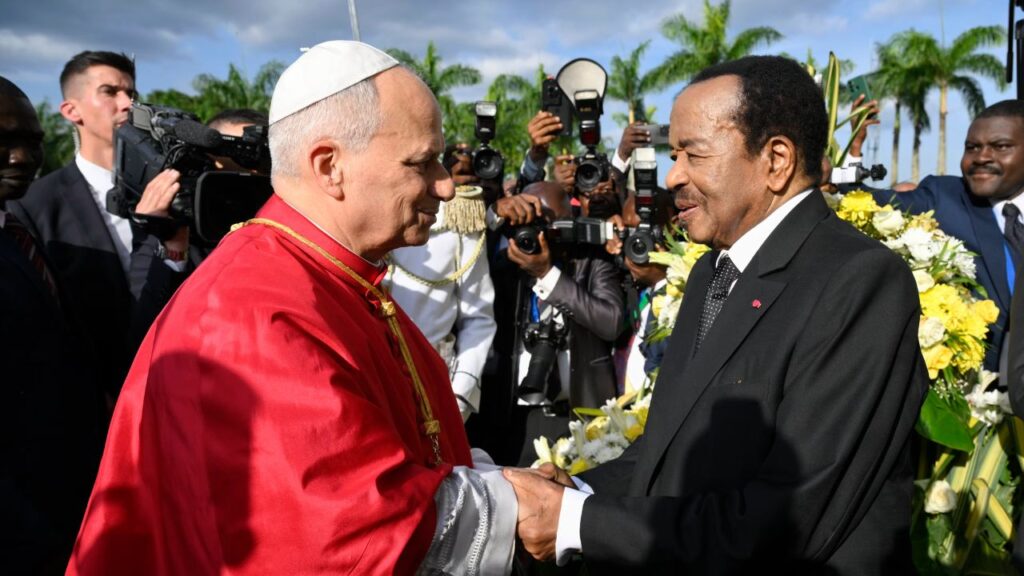
Pope Leo XIV is welcomed to Cameroon by President Paul Biya on April 15, 2026. | Credit: Vatican Media

Pope in Cameroon: Peace ‘cannot be decreed: It must be embraced and lived’

The second stop on Leo’s Africa trip is Cameroon, a country marked by conflict, yet whose civil society

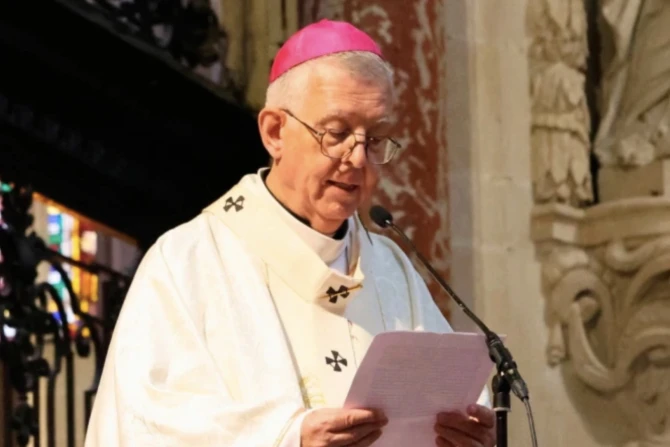
French archbishop rescinds appointment of priest convicted of rape, asks for forgiveness

Archbishop Guy de Kirimel of Toulouse, France, has reversed his decision to appoint a priest convicted of rape as chancellor of the archdiocese and asked forgiveness of the victims of abuse.
Pope Leo XIV greets the faithful in Piazza della Libertà in August 2025. (photo: Credit: Marco Iacobucci Epp/Shutterstock)

Pope Leo XIV: Women and Men in Religious Life ‘Are Called to Become Experts in Synodality’

Pope Leo expressed gratitude for “the longstanding contributions” of religious institutions, highlighting their work in “evangelization, education, and
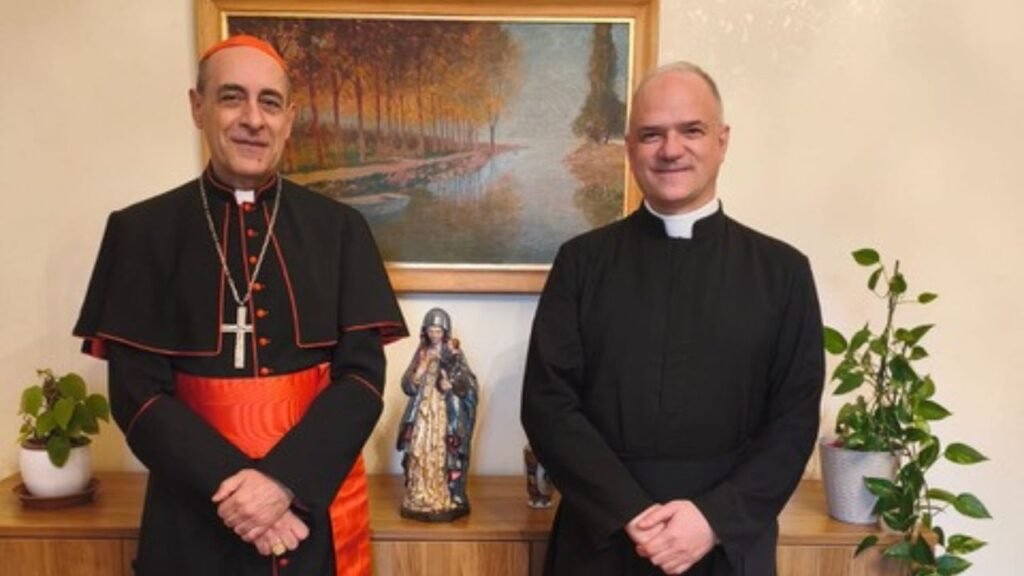
Cardinal Victor Manuel Fernández, prefect of the Dicastery for the Doctrine of the Faith, and Father Davide Pagliarani, superior general of the Society of St. Pius X (SSPX) | Credit: Dicastery for the Doctrine of the Faith

Vatican offers talks with SSPX, warns illicit consecrations would end dialogue

Doctrinal office tells traditionalist group that consecrating bishops without papal mandate would mean a “decisive rupture” of communion.

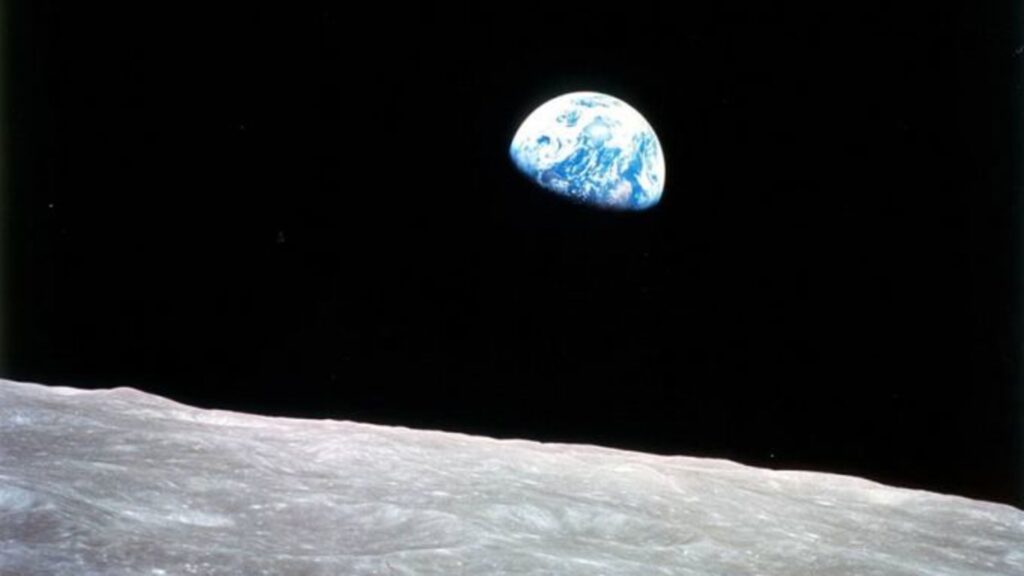
Artemis II moon mission ‘a great development,’ Vatican Observatory director says

EWTN News speaks with Jesuit Father Richard A. D’Souza, director of the Vatican Observatory since September 2025. NASA’s
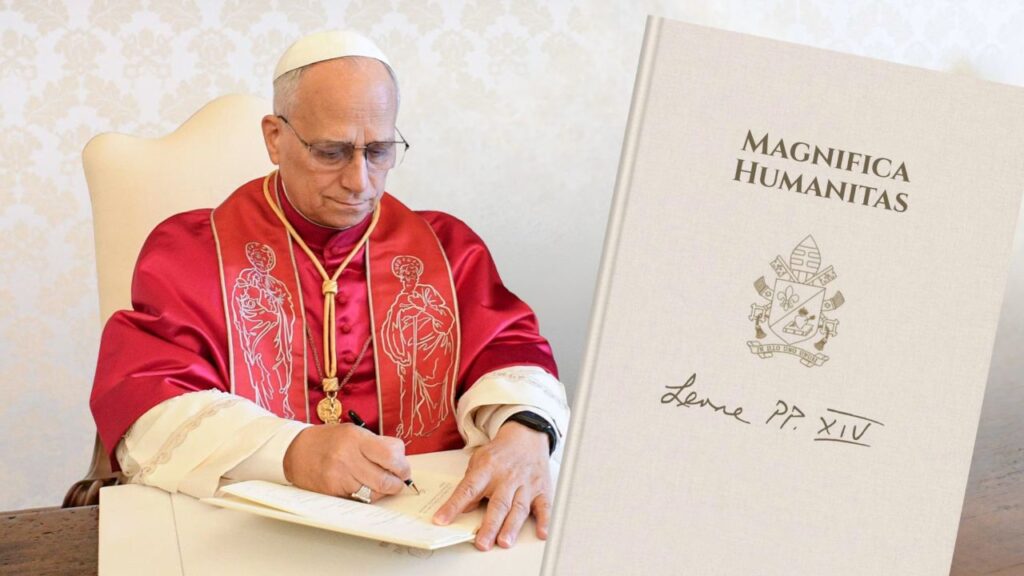
Pope Leo XIV signed his first encyclical, 'Magnifica Humanitas:' On Safeguarding the Human Person in the Time of Artificial Intelligence, on May 15, 2026, the 135th anniversary of the encyclical 'Rerum Novarum' by Pope Leo XIII. 'Magnifica Humanitas' was released on May 25, 2026. | Credit: Vatican Media. Image composition: EWTN News

Vatican to publish Pope Leo XIV’s first encyclical May 25

The pope signed ‘Magnifica Humanitas’ (“Magnificent Humanity”) on May 15, the 135th anniversary of the publication of the

LIVE
FROM THE VATICAN

Be present live on EWTNVatican.com