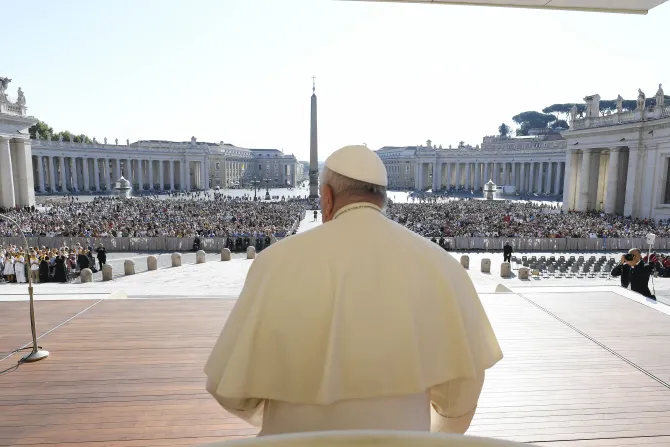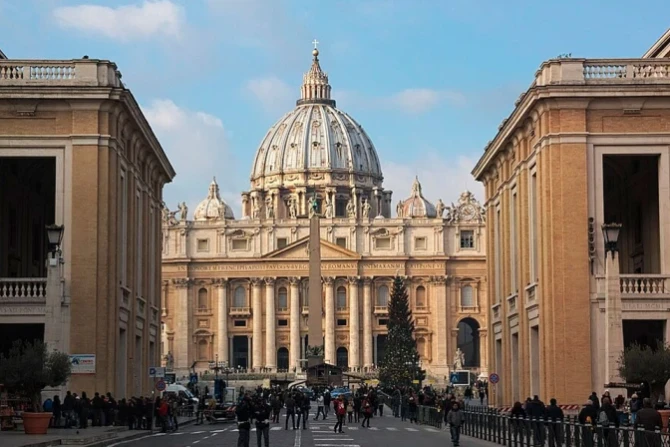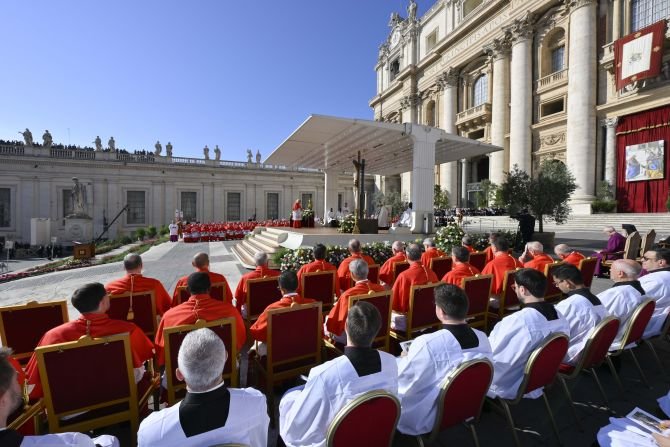
Pope Francis created 21 new cardinals from across the world at a Saturday morning consistory in St. Peter’s Square, reflecting on how the geographic expansion of the Church’s leadership represents a fulfillment of the promise of Pentecost.
“You new cardinals have come from different parts of the world, and the same Spirit that made the evangelization of your peoples fruitful now renews in you your vocation and mission in and for the Church,” the pope in his homily for the event told the new cardinals, 18 of whom are under age 80 and therefore eligible to vote in a conclave.
The Sept. 30 consistory, which saw cardinals created from 15 different countries, was in continuity with Francis’ steady geographic diversification of the College of Cardinals, carried out over the nine consistories he has held during his 10-year pontificate.
The new red hats include Cardinal Stephen Ameyu Martin Mulla of Juba, the first-ever cardinal from South Sudan. Two other African prelates — Cardinal Stephen Brislin from Cape Town, South Africa and Cardinal Protase Rugambwa of Tabora, Tanzania — were also elevated. The total percentage of cardinal electors from Africa is now 14%, a rise of 5% since 2013.
The pope also created cardinals representing Catholic communities in non-majority Christian countries: Cardinal Pierbattista Pizzaballa, the Latin Patriarch of Jerusalem; Cardinal Stephen Chow of Hong Kong; and Cardinal Sebastian Francis of Penang, Malaysia. In total, 16% of all cardinal-electors are now from Asia, compared with 9% before Francis’ pontificate.
Five new cardinals from Latin America — including three from Francis’ native Argentina — were also created on Saturday, and the total percentage of electors from that part of the world now stands at 18%, a modest 2% higher than before the Argentinian pope began his reign.
“Mother Church, who speaks all languages, is one and is Catholic,” said Pope Francis at the consistory. The pope has now created cardinals from 66 different countries, including several from countries that have never had a red hat, such as Mongolia and Singapore.
In contrast to the increase in cardinals from the global South and East, the percentage of cardinals from Europe has fallen from 53% in 2013 to 39% today — though this seems to be part of a larger trend; all but one elector in the 1903 conclave, for instance, were European, with more than half from Italy.
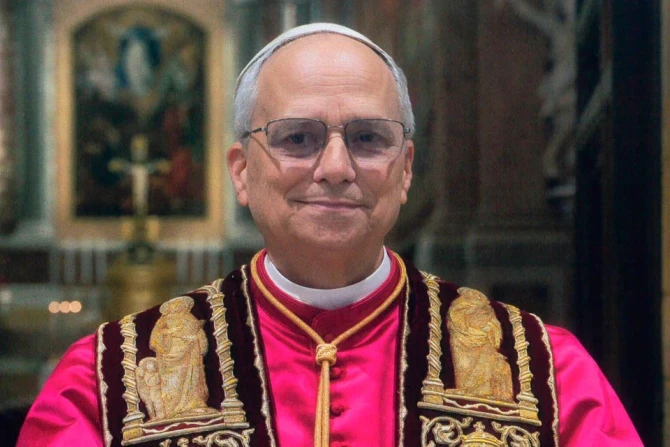
Geographic diversity, though, was not the only priority represented in the pope’s new cardinals, as key ecclesial collaborators were also included. Cardinal Victor Manuel Fernández, the pope’s longtime theological ghostwriter who was recently tapped to head the Dicastery for the Doctrine of the Faith, received a red hat, as did Cardinal Christophe Pierre, a Frenchman and the pope’s representative to the United States.
Cardinal Robert Prevost, a native of Chicago who leads the Dicastery for Bishops; and Cardinal Americo Aguiar, the Portuguese prelate who led the organization and implementation of World Youth Day 2023 in Lisbon, were also elevated during the consistory.
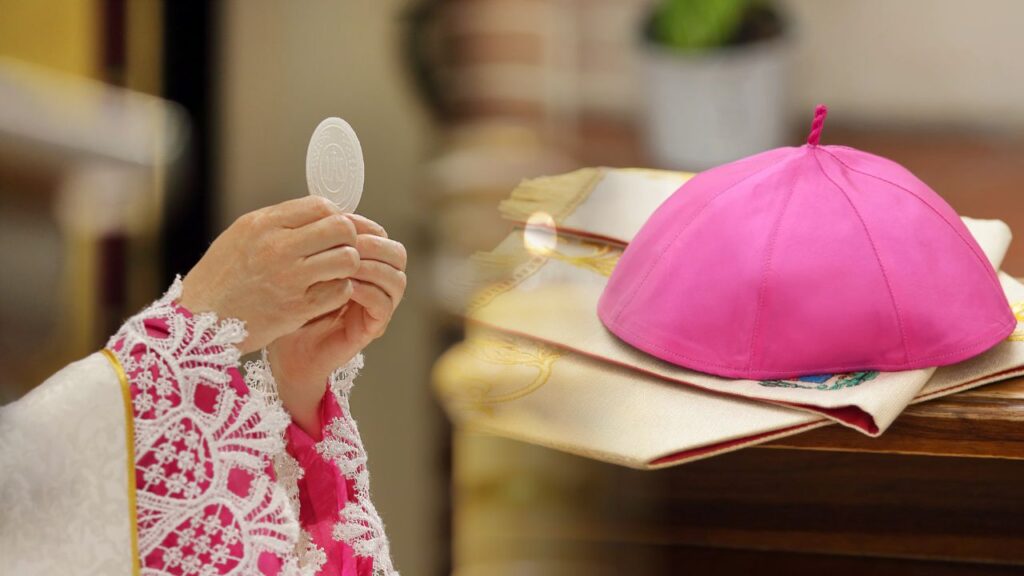
With the 18 new electors, the current number of cardinals eligible to pick the next pope stands at 136 — 99, or 72%, of whom were picked by Pope Francis. The expansion of the College of Cardinals was symbolically expressed at the consistory, as, after receiving his red biretta, each new cardinal went to sit with the veteran cardinals who had gathered for the event.
During his homily, the pope shared a guiding image for the College of Cardinals: that of “a symphony orchestra, representing the harmony and synodality of the Church.”
“Diversity is necessary; it is indispensable. However, each sound must contribute to the common design.”
The pope compared his role in the symphony to that of the conductor, who “has to listen more than anyone else.” But the true protagonist of the Church, Pope Francis said, is the Holy Spirit, who “creates variety and unity” and “is harmony itself.”
This article was previously updated to CNA.