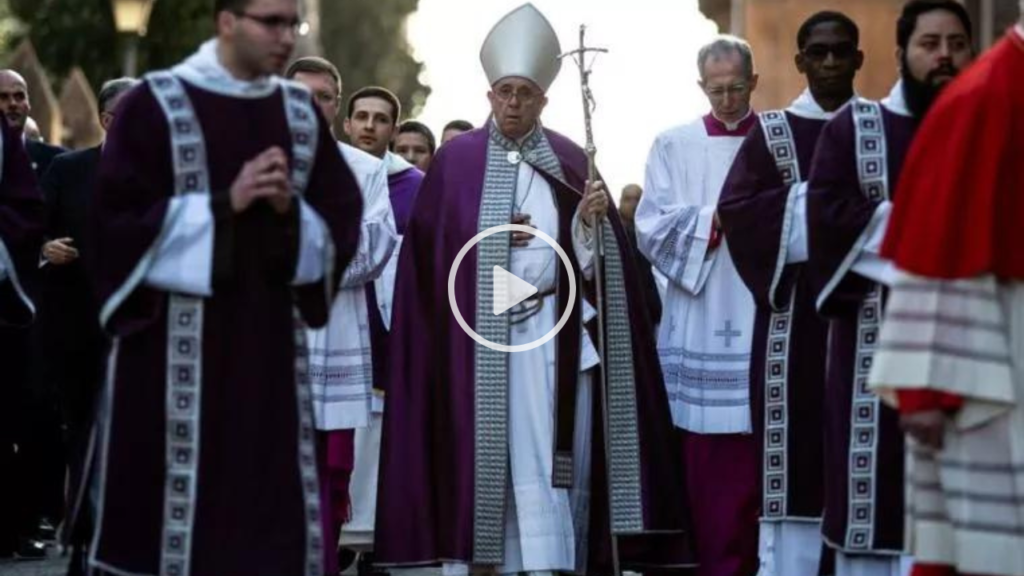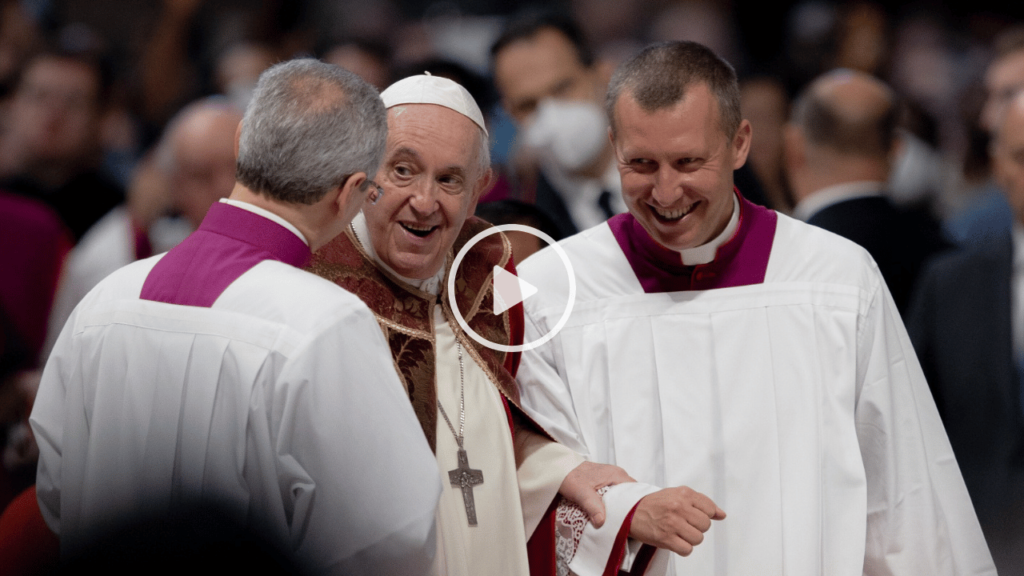
Pope Francis on Tuesday issued a new statute for the so-called Vatican bank (officially the Institute for Religious Works, or IOR), but in fact, it closely resembles the regulation approved more than three years ago “ad experimentum” — on an experimental basis.
Evidently, the pope was satisfied with the results of the experiment. The intent is to align the rules of the IOR with last year’s apostolic constitution Praedicate evangelium, which regulates the functioning of the dicasteries and entities of the Curia.
The new statute does include some minor adjustments, such as redefining some of the offices of the institute. At the same time, it leaves certain critical issues unaddressed.
First, some background. The history of the IOR begins in 1942, when Pius XI erected the Institute for Works of Religion in Vatican City, absorbing into it the preexisting Administration for Works of Religion. Pius himself approved the IOR’s statute on March 17, 1941. Before the 2019 experimental statute, the IOR was regulated by a 1990 chirograph (papal letter) by Pope John Paul II.
What is missing in the statute?
The supervisory framework to which the IOR belongs is not mentioned, nor is the Supervisory and Financial Information Authority (ASIF), which is the body that supervises the operations of the IOR. In short, it seems that the IOR remains a sort of institution in its own right, almost unrelated to the significant reform of Vatican finance Pope Francis wanted.
This impression is strengthened by the fact that the IOR can only accept deposits between entities and people of the Holy See and the Vatican City State. That wording already was present in the 2019 statute, which did not include other users of the IOR, such as dioceses and parishes, institutes of canon law, and embassies to the Holy See.
Both the supervisory framework and the variety of customers are mentioned on the institute’s official website, so, surprisingly, these are not included in the new statute.
What hasn’t changed is that the IOR remains autonomous as regards the selection of personnel and also salaries, which therefore differ from the general salary levels of the Roman Curia (article 27 of the statute).
It is striking, among other things, that the institute’s independence is not counterbalanced by the independence of the authority that supervises the IOR, the ASIF. The director of ASIF can propose an estimated budget and the hiring of personnel, for instance, but those decisions are subject to another entity, the Independent Evaluation Commission. That is not the case with the IOR.
The bodies of the institute remain the Commission of Cardinals, the Prelate, the Board of Superintendence, and the Direction.
Other key innovations made in 2019 remain in the new statute: the outsourcing of auditors, the increase in the size of the lay governing board from five to seven members, and some restrictions on the temporal extension of the offices.
What’s different about the new statute?
The direction of the IOR changes. In 2019, the institute was structured with a director and a vice director appointed by the Board of Superintendence with the approval of the Commission of Cardinals. With the new statute, the direction becomes a monocratic body. The director must submit to the Board of Superintendence every action that does not fall within his competence.
Furthermore, the new statute says, “in case of urgency, the director general may be authorized to act outside their responsibilities by the president of the Board of Superintendence, who will hear at least one of the other members of the board. The determination, signed by the director general and with immediate effect towards third parties, must be submitted for ratification to the Board of Superintendence in its first useful meeting.”
The figure of the deputy director remains, but it is only a function that the general director can delegate from time to time.
The director, therefore, assumes broader powers and manages and administers the institute. The Board of Superintendence, on the other hand, has the task of defining the strategic lines, general policies, and supervision of the activity of the IOR.
The mandates all have a five-year term with the possibility of only one renewal, as defined by Praedicate evangelium, though the 2019 statute already established this.
The Commission of Cardinals and the Board of Superintendence will have a nonsimultaneous mandate. That is, they will not expire together. There will therefore be a time when the Superintendent Council will act with a new Commission of Cardinals and vice versa.
A provision on conflict of interest has also been inserted, according to which “each member of the Board of Superintendence refrains from participating in the votes relating to resolutions in which he has an interest, current or potential, on his behalf or behalf of third parties.”
The director general continues to be appointed by the Board of Superintendence and approved by the Commission of Cardinals, but from now on, “based on a short list of at least three suitable candidates.” He may be hired on a permanent or fixed-term basis, as already established.
As for the Commission of Cardinals, the fact remains that the cardinals will elect their presidents and also choose the prelate of the IOR.