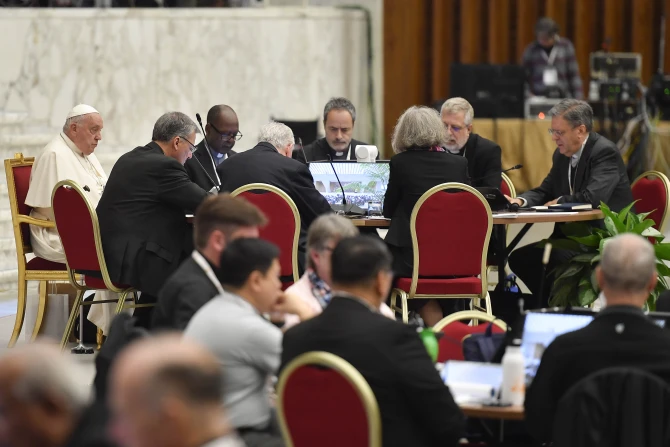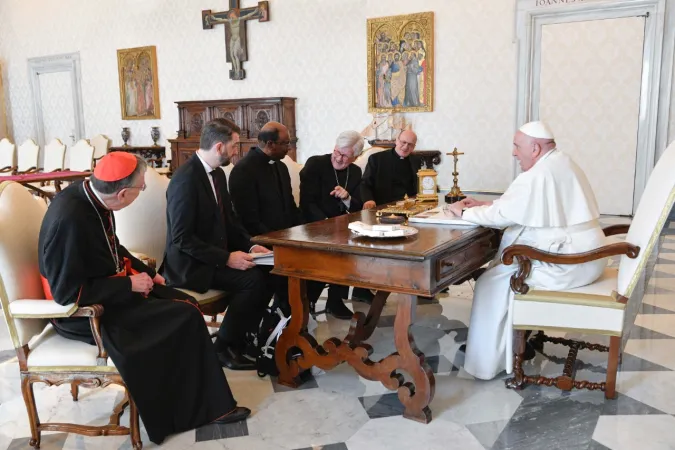
Plans for the anniversary of the First Ecumenical Council were discussed, with a particular focus on the ecumenical opportunities offered by the 1700th anniversary of the Council of Nicaea. These discussions took place between the new leadership of the Ecumenical Council of Churches and the Dicastery for the Promotion of Christian Unity. The ecumenical delegation visited the Vatican on March 22nd and 23rd and had a private audience with Pope Francis.
The Ecumenical Council of Churches, also known as the World Council of Churches, was founded in 1948 and has been visited by three Popes, including Pope Francis. During their visit to the Vatican on March 22nd and 23rd, the Council presented its new leadership: Bishop Heinrich Bedford-Strohm, a Lutheran and Moderator of the Central Committee, Reverend Jerry Pillay of the Reformed Church in South Africa, General Secretary, and Vasile-Octavian Mohic of the Romanian Orthodox Church, who leads the program for ecumenical relations.
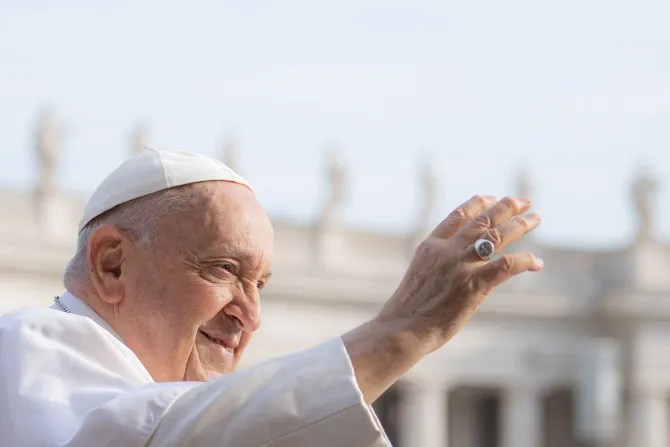
During their private audience with Pope Francis on March 23rd, Reverend Pillay expressed gratitude to the Pope for emphasizing the importance of the common vocation of Christians as a visible sign of reconciliation and unity. Pillay expressly referred to the message sent by Pope Francis to the 11th Assembly of the Ecumenical Council of Churches last September 2022.
The Dicastery reports that Pope Francis reiterated the Church’s irrevocable commitment to pursuing the path of Christian unity. The delegation also met with representatives of dicasteries that have working relationships with the Council: the Dicastery for the Promotion of Christian Unity, the Dicastery for Interreligious Dialogue, and the Dicastery for Integral Human Development.
In particular, in discussions with the Vatican’s ecumenical Dicastery, the possibility of strengthening future collaboration was discussed, and the ecumenical opportunities offered by the preparation for the 1700th anniversary of the Council of Nicaea in 325 were explored. The celebrations will take place in 2025.
The ecumenical movement also discussed the possibility of revitalizing the theme of the visible unity of the Church in terms of shared mission and witness in the world.