It has been 25 years since the grand celebrations of Cardinal Aloizije Stepinac’s beatification. The occasion was marked by a special Mass held at the sanctuary of Santa Marija Bistrica, where a shower of rose petals rained down in his honor. This touching gesture was organized by the Catholic magazine Glas Koncila, which was also celebrating its sixtieth anniversary. Another significant Mass took place in Zagreb, the city where Stepinac served as archbishop and endured a deeply unjust trial.
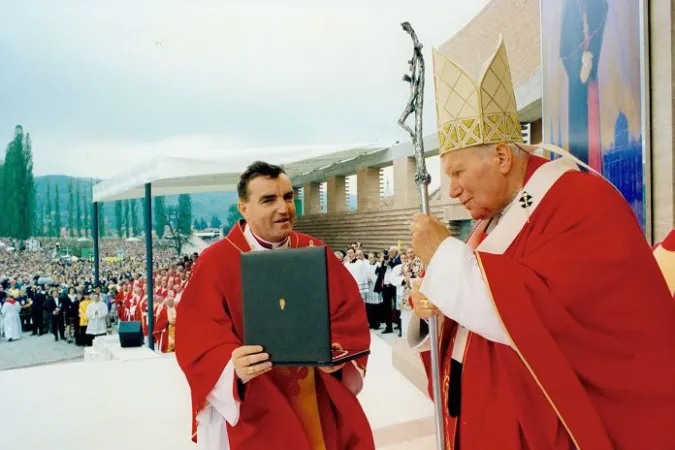
On October 3, 1998, a quarter of a century ago, Cardinal Alojzije Stepinac was beatified by Pope John Paul II. The celebrations that unfolded across Croatia, where his sanctity remains undisputed, were nothing short of grand and significant.
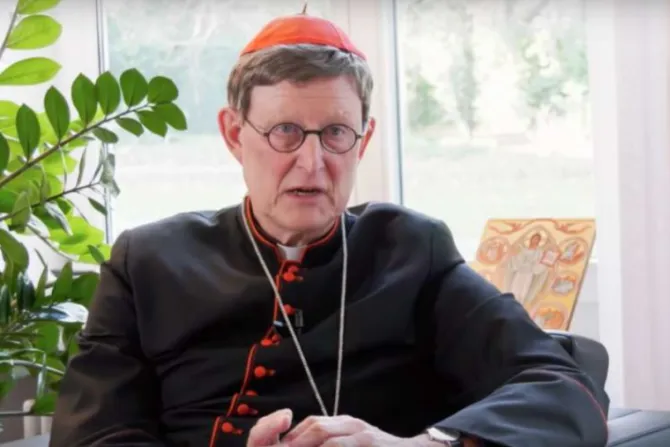
The importance of this occasion was underscored by the presence of Cardinal Bozanic, who, in 1998, had just taken on the role of Archbishop of Zagreb. So profound was the significance of the beatification that he chose to participate in these celebrations rather than attend a consistory. Cardinal Bozanic not only greeted Pope John Paul II at the outset of the beatification Mass but has also tirelessly championed the cause of Stepinac’s canonization over the years. He dedicated himself to gathering historical documents and countering interpretations by certain Serbian Orthodox groups that portrayed Stepinac as having affiliations with Nazi Ustasha collaborators. This effort even prompted the Pope to establish a joint Catholic-Orthodox historical commission, which, unsurprisingly, did not reach a unanimous verdict. Consequently, the canonization process, complete with a recognized miracle and a concluded inquiry, has been stalled.
In an exclusive interview with Glas Koncila during the celebrations at the Marija Bistrica sanctuary, Cardinal Bozanic referred to Cardinal Stepinac’s beatification as “an essential milestone for us as a Church and as a nation,” describing it as a guiding light for their actions.
Cardinal Bozanic fondly recalled the moment of beatification as a “gift” that profoundly impacted his own episcopal ministry. He emphasized the overwhelming joy experienced by the assembled faithful and underscored how Cardinal Stepinac carried the entire nation within his heart, both during active service and his period of unjust incarceration.
The former Archbishop of Zagreb noted that Cardinal Stepinac serves as a “source of strength and support” and a “beacon of hope” for the Croatian people. Cardinal Tauran once remarked that Croatia, with its predominantly Catholic population, often finds itself under the scrutinizing gaze of many.
But who was Blessed Alojzije Stepinac? Cardinal Bozanic explained that he was, above all, “a man of the Church: a devout believer, a committed Christian, a bishop, and ultimately, the Archbishop of Zagreb.” Every action he undertook was rooted in this ecclesiastical position. While it is true that his influence extended beyond ecclesiastical circles, leaving a lasting social impact, he consistently acted as a man of the Church and as an archbishop. Cardinal Bozanic firmly believed that anyone examining the life of Blessed Stepinac from this perspective would make profound and enriching discoveries. At its core, Cardinal Stepinac’s legacy is that of a “master of conscience shaped by the Gospel.” He urges all to nurture their Christian conscience and live in accordance with its principles. His life stands as a testament to the enduring power of hope, even in the face of suffering.
During the celebration at the open-air church area dedicated to Blessed Alojzije Stepinac, an extraordinary event unfolded—a shower of ten thousand roses, symbolizing a votive act to the “saint of the roses,” Saint Therese of Lisieux, showered from a helicopter. This touching initiative was organized by the “Santa Maravillas di Gesù” foundation and the Croatian Catholic weekly Glas Koncila, commemorating an unbroken six-decade tradition of publication.
In Zagreb, a Mass was held to commemorate the 25th anniversary of the beatification. In his homily, Archbishop Kutlesa asserted that “Stepinac is a divine gift to the Croatian people during one of the most critical moments in their history.” He emphasized that Stepinac’s character was “beyond human judgment and unaffected by opinions shaped by the prevailing ideology regarding his guilt.” Instead, he entrusted his defense to divine providence. Stepinac embodied the spirit of a martyr—one unshackled by ideologies, trends, or influences, driven solely by his unwavering commitment to Jesus Christ and His Gospel.
So, what makes Blessed Stepinac truly exceptional? Firstly, his unwavering “faith in God,” as Archbishop Kutlesa articulated. Secondly, Stepinac possessed a penetrating and prophetic spirit, foreseeing the eventual unification of Europe. Interestingly, he had already recognized “more than eighty years ago” the gravest weakness afflicting contemporary Europe—the loss of its Christian identity, spiritual foundations, cultural heritage, traditional customs, historical truths, and Christian symbols in the public sphere. Stepinac believed that Europe’s pursuit of a godless form of humanism was a grave oversight, as it overlooked the deeply Christian values of social virtue, social justice, solidarity, care for one’s neighbor, the preservation of nature, and ecological responsibility.
The second remarkable aspect of Cardinal Stepinac’s character was his boundless love for every individual, irrespective of their religious affiliation or heritage. This love extended to his forgiveness of those who harbored animosity toward him. His exceptional compassion even led him to participate in the rescue of “individuals of diverse nationalities and religious backgrounds, including those who identified as communists.”
Archbishop Kutlesa recalled how Winston Churchill and Louis Breier, the president of American Jews, publicly supported Cardinal Stepinac during his trial. Breier vehemently refuted any association between Stepinac and the Nazis, stating that as early as 1934, Stepinac had become “a true friend of the Jews, who, during those days, suffered under the persecution of Hitler and his cohorts.” He was one of the few voices in Europe who openly and fearlessly opposed Nazi tyranny at a perilous juncture, openly condemning the Nuremberg racial laws.
Furthermore, Blessed Stepinac was deeply concerned about war orphans, ensuring their care in monasteries, colleges, and orphanages. However, his paramount concern remained the spiritual well-being of those “lost in impiety.” Archbishop Kutlesa stressed that the communists who condemned him knew full well that he had been unjustly convicted for political expediency.
Finally, one cannot overlook Cardinal Stepinac’s profound devotion to the Papacy and the Catholic Church. His unwavering commitment occurred during a period characterized by exceptional challenges, with a generation of bishops, priests, and monks who were willing to lay down their lives rather than betray their faith. In this tumultuous historical period, Blessed Stepinac emerged as a genuine shepherd and an exemplary figure.